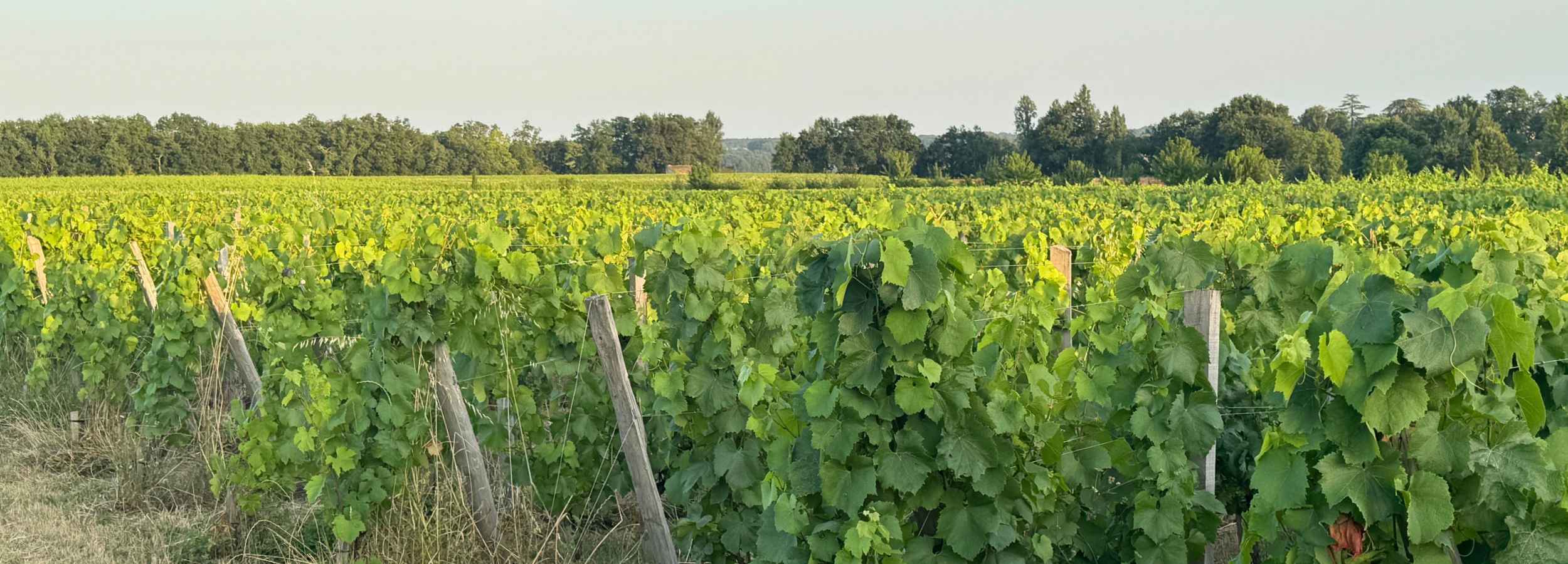
The estate
24 hectares on the highest plateau in Gironde, including four hectares preserved as woodland. A limestone bedrock some thirty million years old, hand harvesting and a few decisions that have gone against the grain. This is the story behind every bottle.
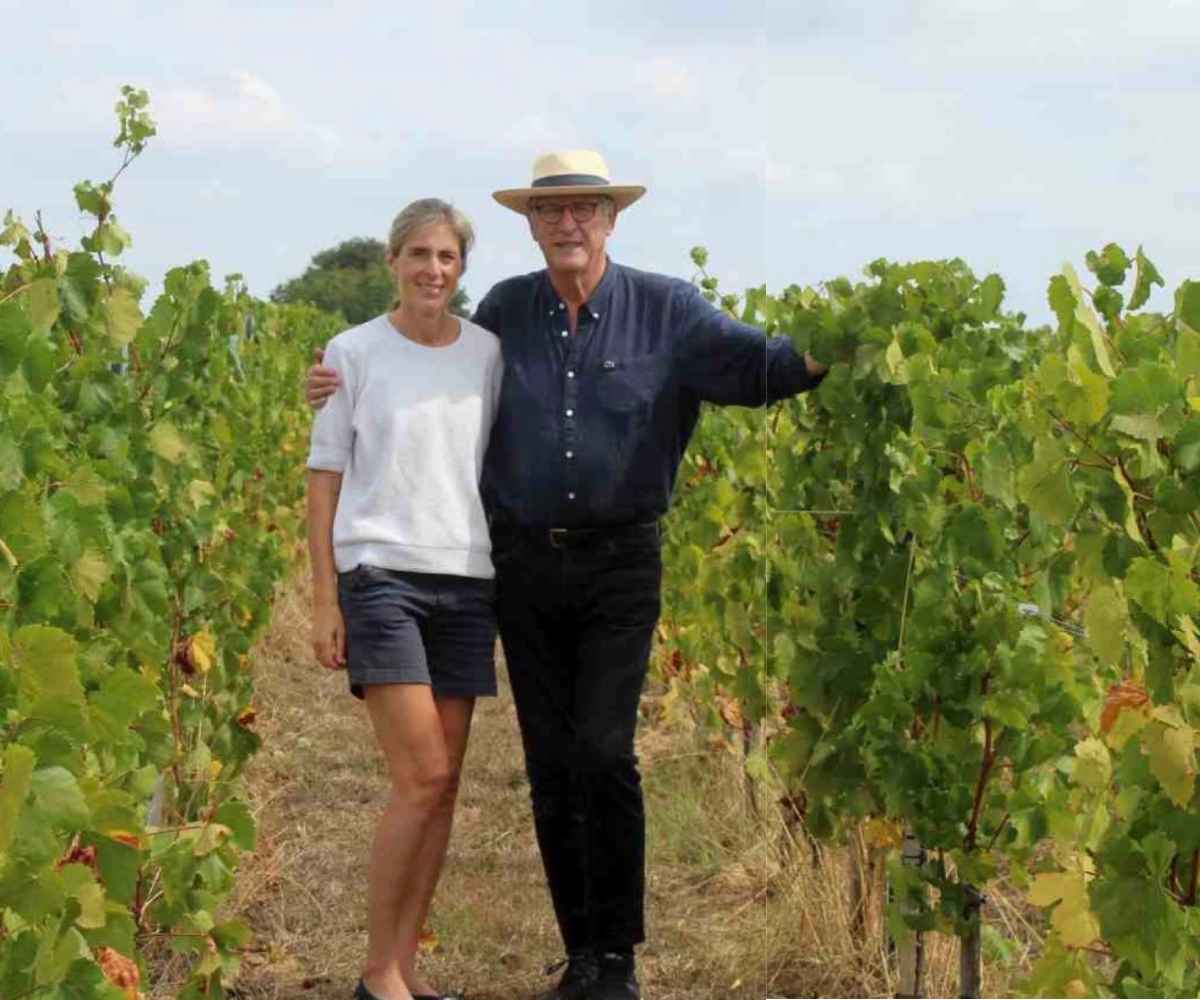
Our story
Olivia and Didier Le Calvez both grew up close to vineyards: Didier in Gironde and Olivia in the Haut-Médoc.
Those shared roots nurtured an ambition over many years: one day, to make a wine of their own.
A plateau standing 100 metres above sea level, just minutes from Saint-Émilion, separated from it only by the small Barbanne stream.
The first vintage is born in 2010
Since then, the vineyard has continued to evolve through plot-by-plot restructuring, renewal of vine material, preservation of old vines and the return of rare historic grape varieties.
In 2019, an unexpected decision opened a new chapter: planting Chardonnay on a plateau renowned for its red wines.
‘After two years of searching, we fell in love with a wine estate that brought together an ideal terroir and climate, and a mix of grape varieties that was ready to be rethought. Everything was in place to make the wine we had imagined: richly aromatic, yet full of subtlety.’
Olivia Le Calvez
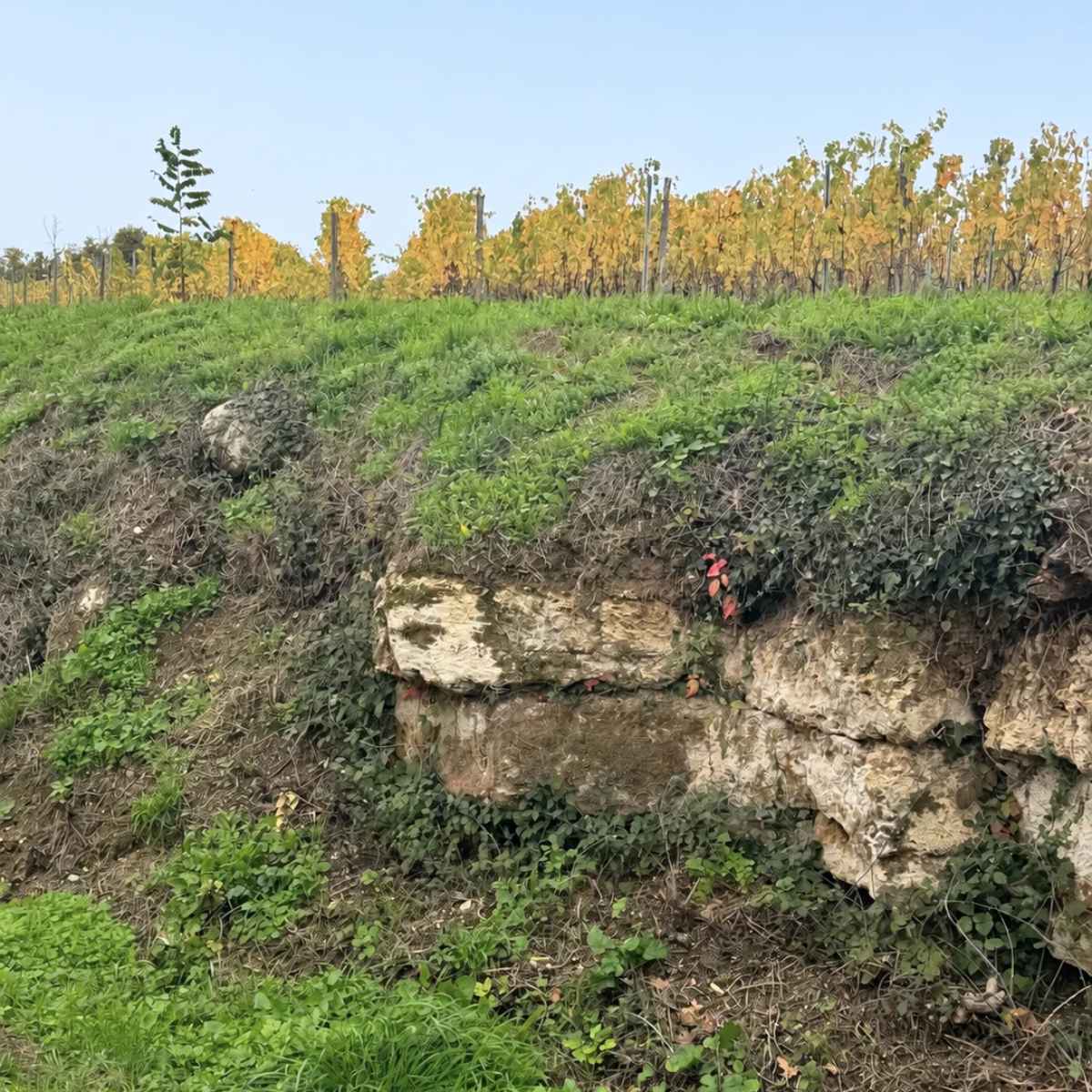
The terroir
Beneath the vines lies Oligocene starfish limestone (calcaire à astéries), formed around thirty million years ago: a bedrock rich in marine fossils, covered by clay-limestone soils and, in places, clay-siliceous soils.
This geological foundation regulates the vines' water supply and limits water stress in hot vintages. It contributes a saline minerality to the grapes and enables deep rooting, essential to the wines' ageing potential.
Altitude makes the difference. On Gironde's highest plateau, constant airflow ventilates the vineyard and helps preserve acidity in the grapes. As vintages become increasingly warm and sunny, this has become one of the estate's greatest assets.
It also made the Chardonnay venture possible: starfish limestone offers this grape a distinctive expression marked by freshness, tension and salinity. In time, Chardonnay is intended to account for approximately 30% of the vineyard.
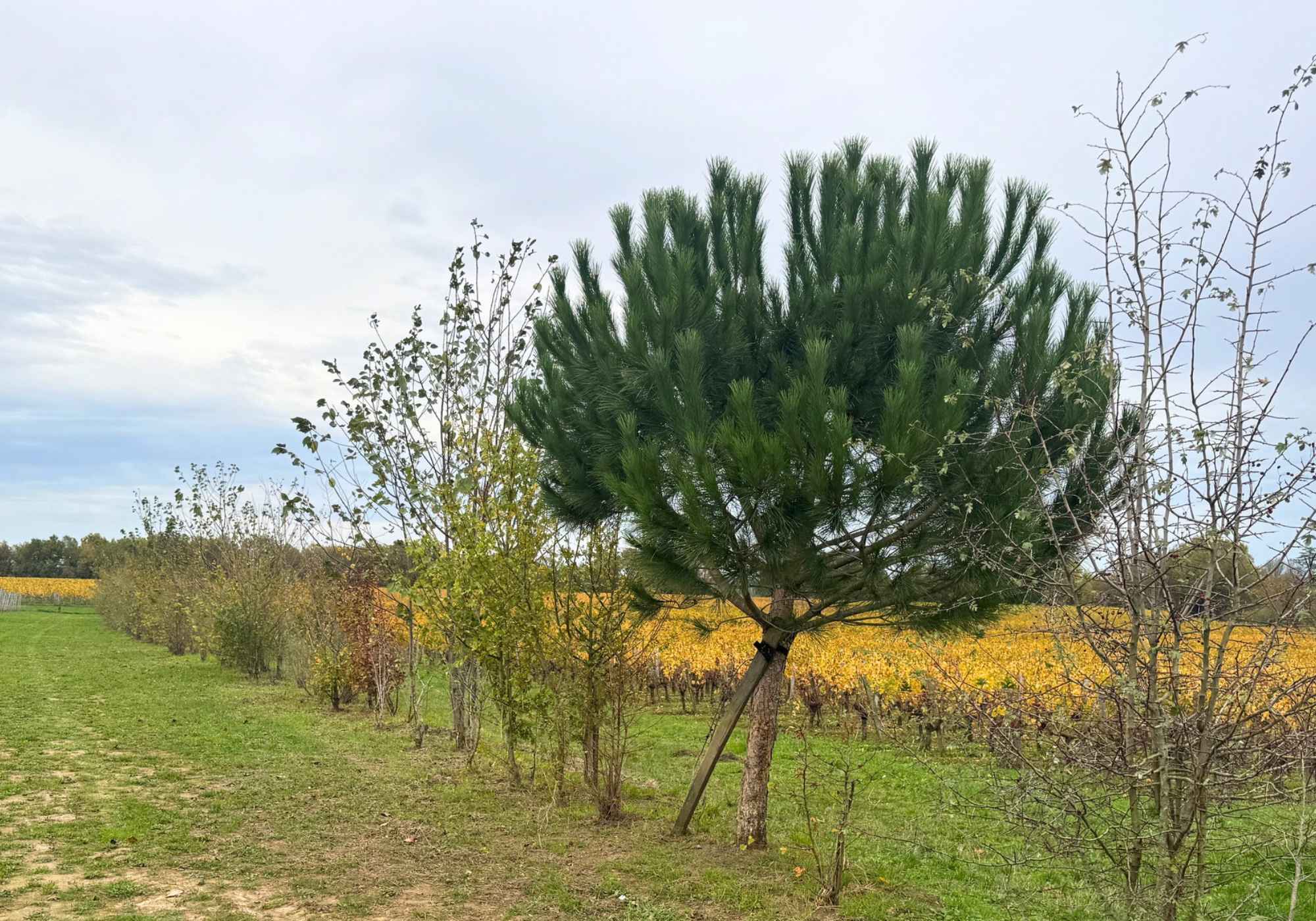
Nature
However remarkable a terroir may be, it can only express itself fully within a thriving ecosystem. Of the estate's 24 hectares, four remain unplanted. These preserved and maintained woodlands, together with country hedgerows and natural meadows, form an ecological corridor around the vineyard plots.
These trees and hedges are far more than ornamental. They stabilise the soil, reduce erosion, provide shelter for beneficial wildlife and create shaded areas that limit water stress in summer. A planted garden completes the landscape.
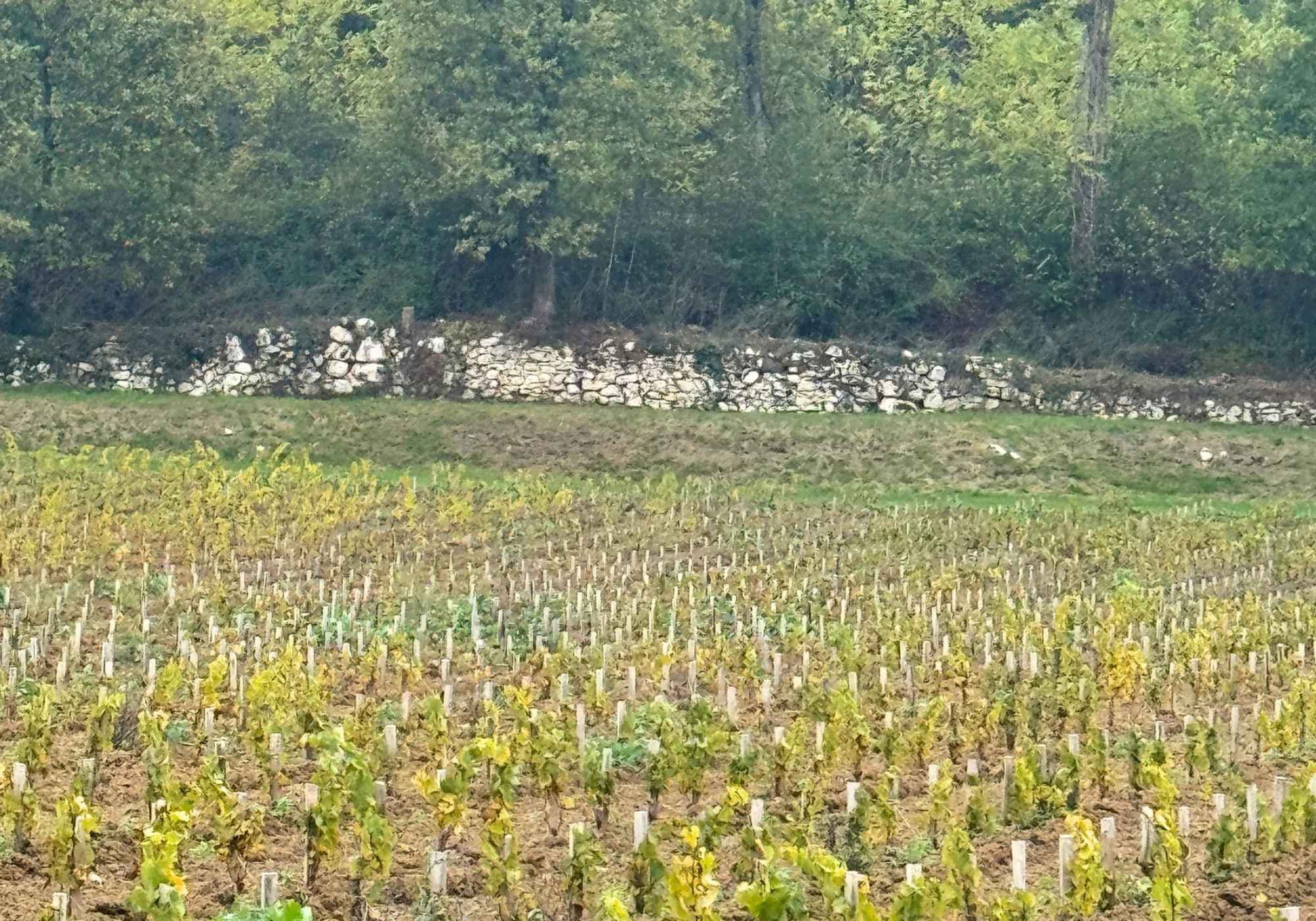
Below ground, life plays its part: fungi, bacteria and earthworms enrich the soil's structure and encourage the vines to put down deep roots.
Respect for the environment is not merely something to describe; it can be tasted in the glass: greater aromatic purity, heightened precision and a balance that needs no correction.
Viticulture
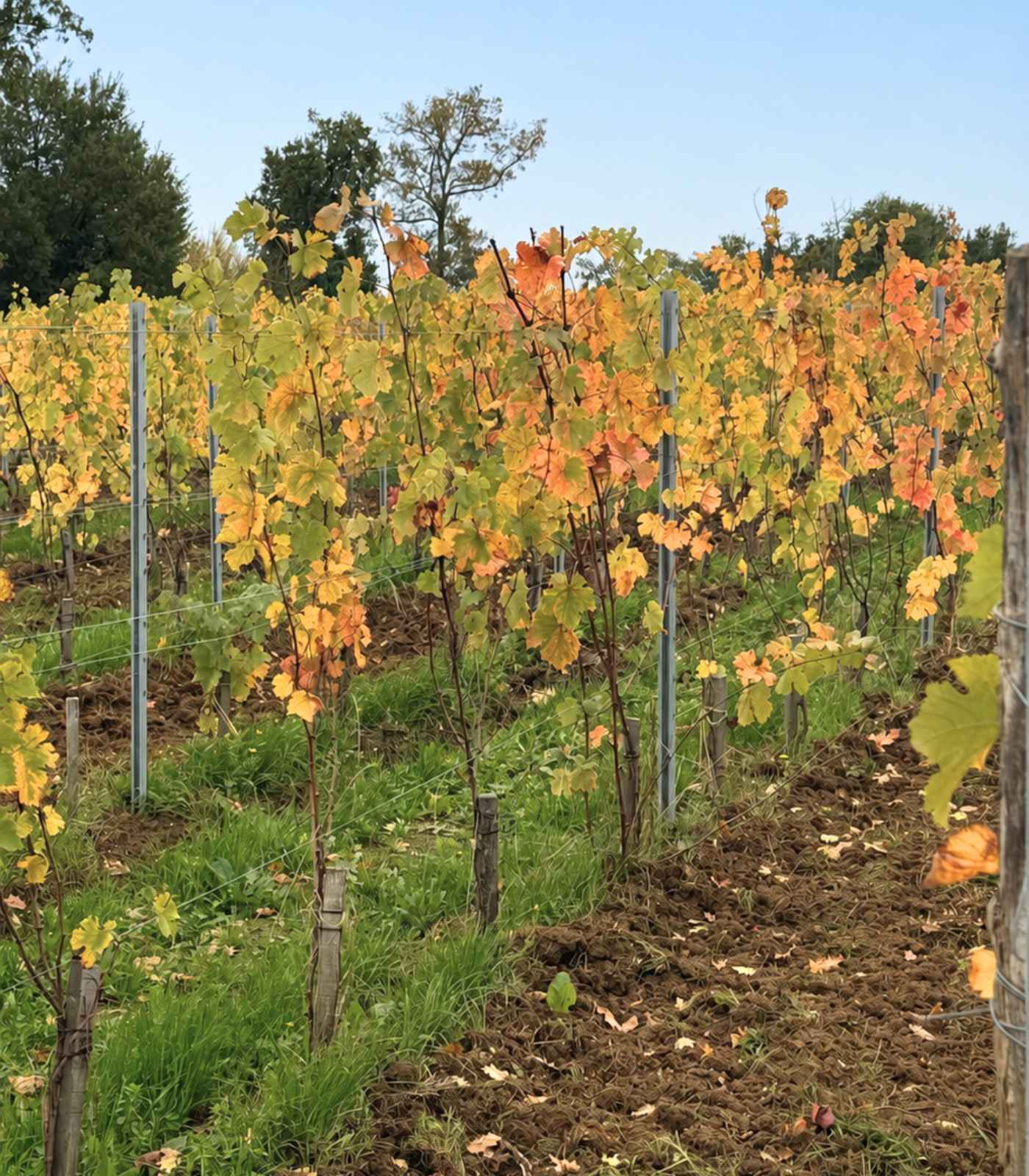
Château Clarisse manages its vineyard through sustainable viticulture. The principle is straightforward: observe first, then intervene only when the vines require it, and only as much as necessary.
- Hand harvesting throughout the vineyard, protecting both the grapes and the soil
- Mechanical cultivation of the soil
- Carefully managed grass cover between rows and at row ends, supporting soil life and limiting erosion
- Plot-by-plot observation, rather than a uniform treatment timetable
- Controlled yields, prioritising concentration and balance over volume
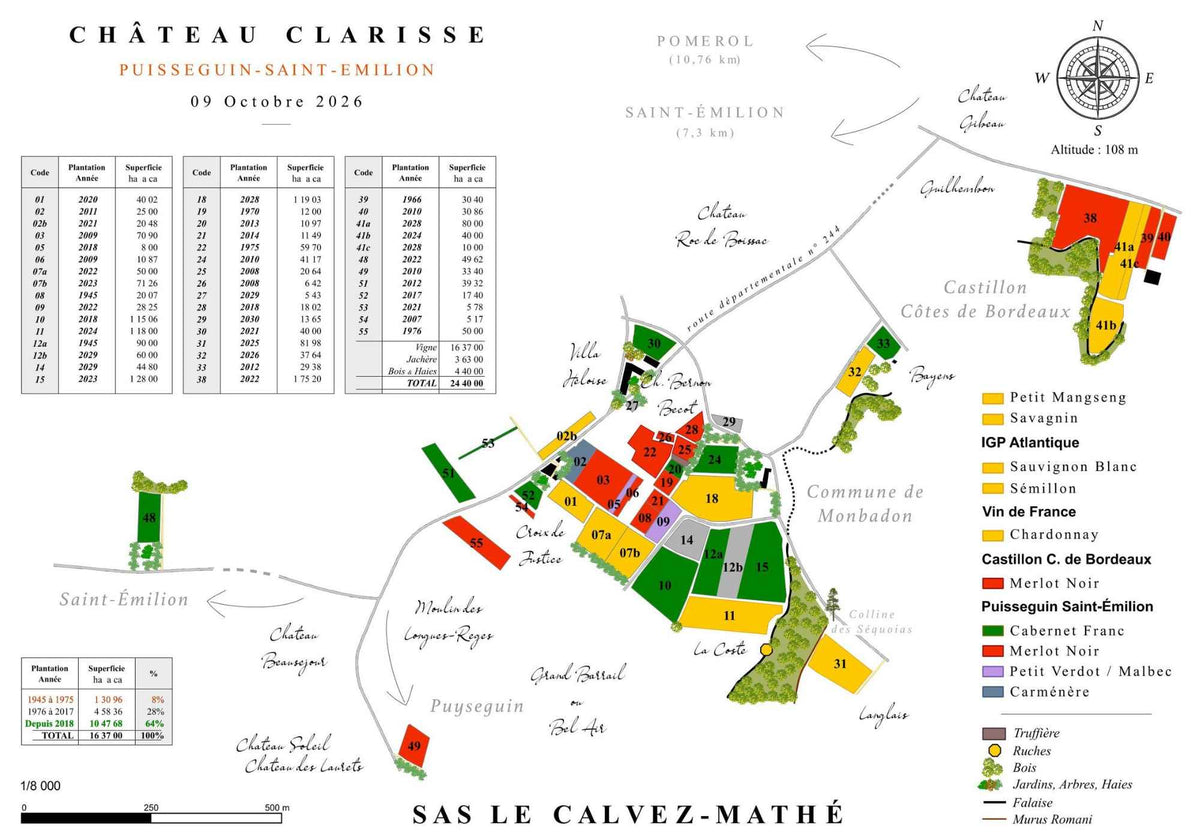
Each new planting is a commitment for forty years. The choice of vine material is therefore a major decision, and this attention to detail has brought historic grape varieties now rare in the region back into the vineyard: Carménère, Petit Verdot and Malbec.
Vineyard map
in 2026
The team
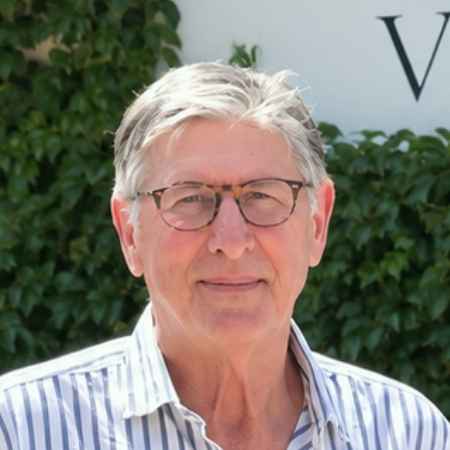
Didier Le Calvez
Owner
Forty years at the highest level of international hospitality, from The Pierre in New York to Four Seasons Hotel George V in Paris, now brought to the vineyard.
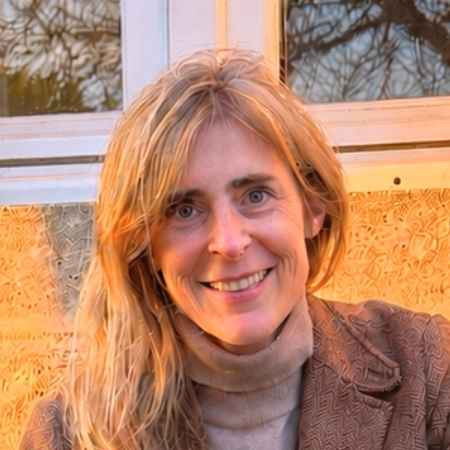
Olivia Le Calvez
Owner
Founder of Hôtel de Toiras in Saint-Martin-de-Ré, Olivia leads the artistic direction and shapes the estate's approach to hospitality. She ensures a coherent vision throughout.
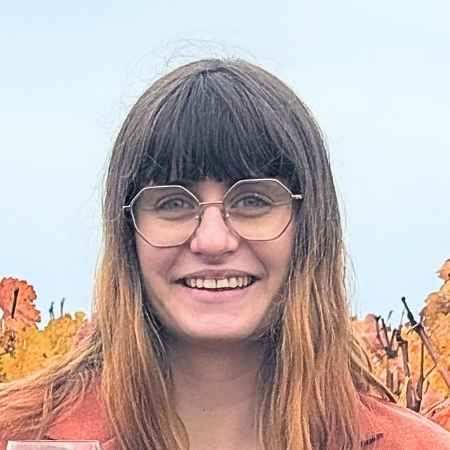
Tiphanie Bondu
Head of Cellar & Operations
Born into a family of winegrowers, she
manages the estate and has overseen all winemaking and ageing since 2024.
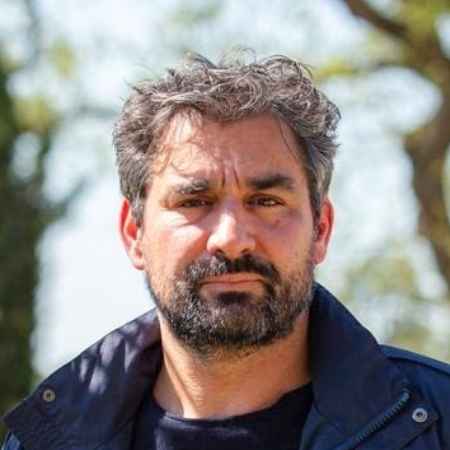
Julien Viaud
Consulting oenologist
A consulting oenologist, he has advised the estate since 2018 and oversees its plot-by-plot vineyard management and winemaking style.
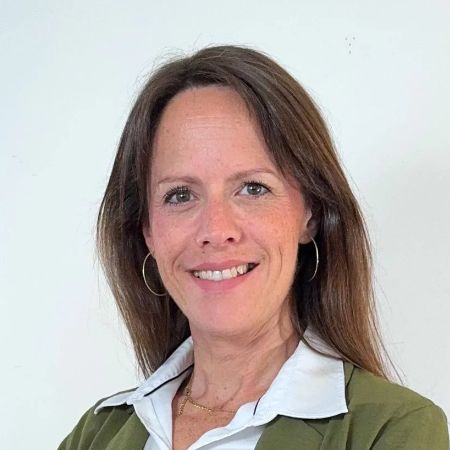
Vanessa Dassenoy
Marketing & Digital
Formerly Head of Design at a European e-commerce company, she shapes the estate’s brand image and digital communications.
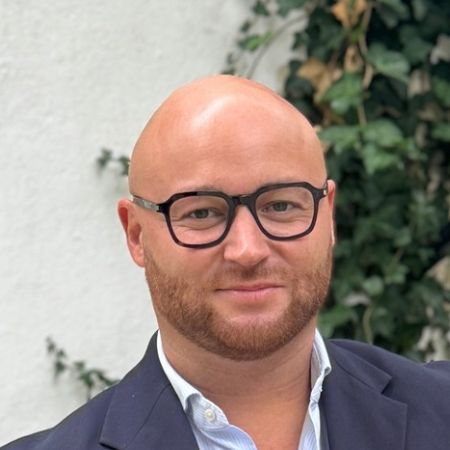
Paul-Louis Coudoumié
Ambassador
A sommelier with a background in Michelin-starred restaurants, he introduces the estate’s wines to restaurateurs, merchants and wine lovers.

Vieilles Vignes 4.1/5
Puisseguin-St-Émilion 4/5
Castillon 4/5

You can also find our wines on Millésima
Discover our other properties